
Best Water Purifiers in India — Is Spending ₹10,000 on RO Actually Worth It?
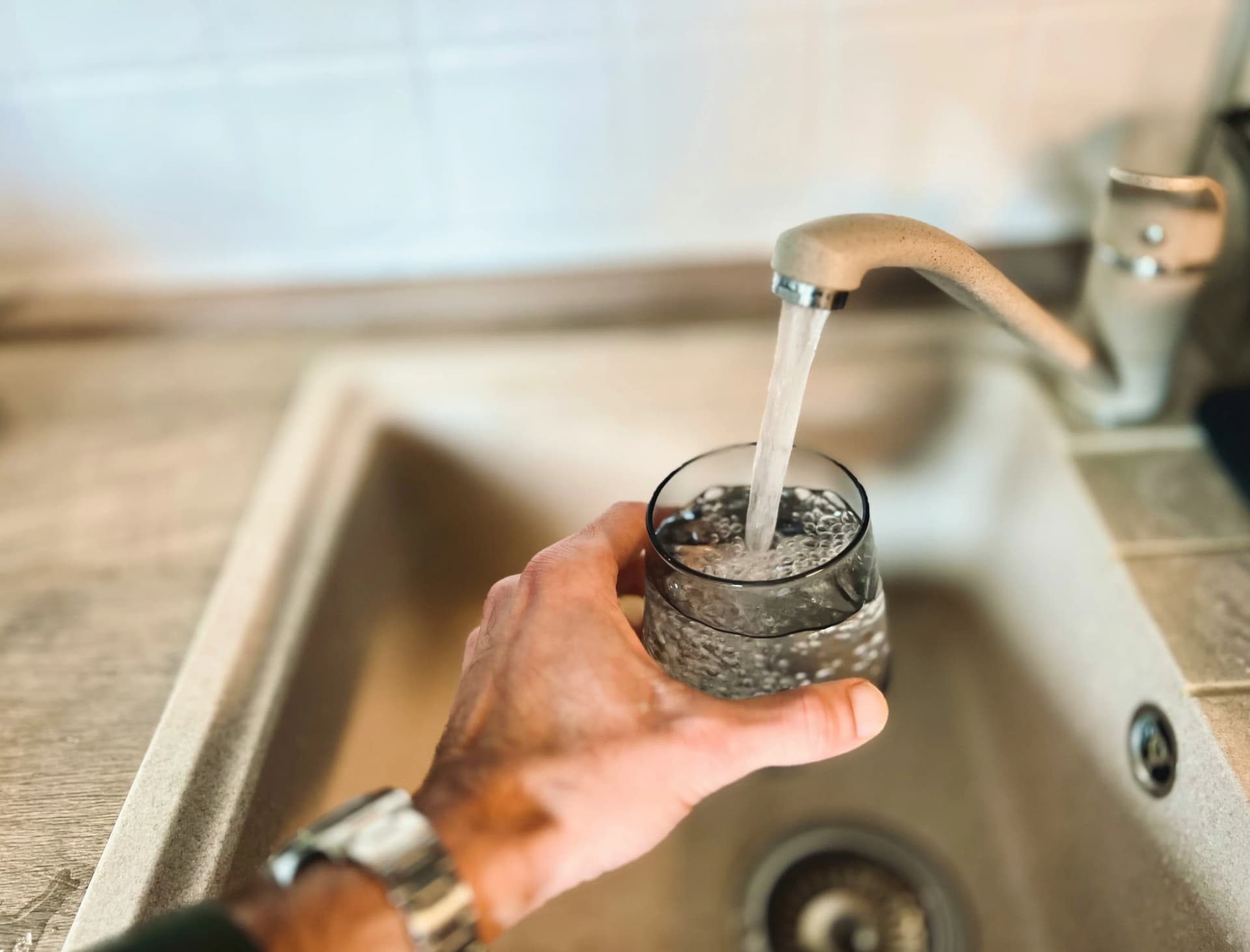
From ₹8,999 to ₹19,499 — we've picked the best water purifiers on Amazon India right now. Whether you want the most trusted service network, zero-maintenance ownership, or a smart purifier with battery backup, our top 5 picks cover every Indian household.
In This Article
- 1.What to Look for in a Water Purifier
- 2.KENT Grand RO Water Purifier — Editor's Pick
- 3.Native M2 Pro Water Purifier by Urban Company — Best Premium
- 4.Aquaguard Delight Aquasaver Water Purifier — Best Overall
- 5.Native M1 Water Purifier by Urban Company — Most Versatile
- 6.Livpure GLO PRO++ Water Purifier — Best Budget
- 7.The Verdict
- 8.Water Purifier Buying Guide for Indian Homes
- 9.Frequently Asked Questions
- 10.Final Thoughts
Water quality in India is inconsistent — not just between cities, but between neighbourhoods and across seasons. Municipal supply that tested fine last year may run through ageing pipes carrying rust and chlorine; borewell water in rapidly expanding suburbs regularly hits TDS readings above 800 ppm; tanker supply in many metros arrives with organic load that needs aggressive treatment before it is safe to drink. A good water purifier is not a luxury item for Indian households — it is essential infrastructure, and choosing the wrong one means either over-spending on technology your water does not need, or under-speccing and leaving contaminants in the glass.
We reviewed five purifiers spanning the full range of Indian households — covering different source-water conditions, maintenance routines, and storage needs. Here is what to know before you buy, and how each model earns its place on this list.
What to Look for in a Water Purifier
Source water TDS: TDS (Total Dissolved Salts) determines how much purification your water needs. Below 300 ppm (typical of good municipal supply), UV+UF is technically sufficient. Between 300 and 2,000 ppm — the range most Indian borewells and hard-water municipal sources fall into — RO is necessary. A ₹200 TDS meter from Amazon tells you where your water stands in under a minute.
Maintenance requirements: Traditional RO purifiers require annual servicing and filter swaps every 6–12 months. Two purifiers in this list (both Native models) use long-life filters rated for two full years with zero maintenance — a genuine differentiator if you travel frequently or simply dislike scheduling technician visits.
Tank capacity and flow rate: An 8-litre tank comfortably supports a family of four. At the standard 20 LPH flow rate, even heavy users will not run the tank dry waiting for a refill.
Water recovery rate: Standard RO purifiers waste 3–4 litres for every litre purified. If you live in a water-scarce city or draw from borewell supply, this ratio matters — the Aquaguard Aquasaver's 60% improved recovery is a real difference over years of daily use.
Brand service network: A purifier is only as good as the support available when something goes wrong. KENT's 19,000+ pin code network and Aquaguard's nationwide reach are factors worth weighing alongside specs, especially for users in smaller cities or borewell-dependent areas.
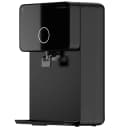
1. KENT Grand RO Water Purifier — Editor's Pick
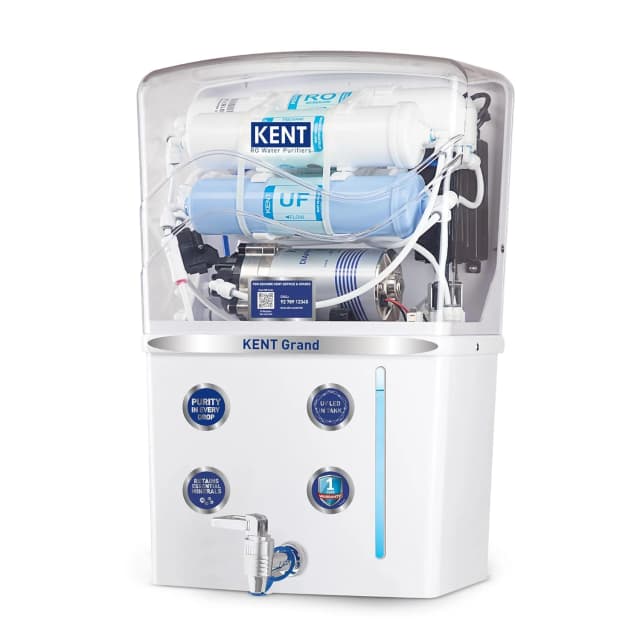
The KENT Grand RO earns our top spot by doing everything well without asking you to trust a newer brand or pay a premium for features you may never use. KENT has the largest RO service network in India — 19,000+ pin codes accessible by WhatsApp, app, or toll-free call — which matters far more than specification sheets when something stops working the night before guests arrive.
Purification is thorough: RO removes dissolved salts, heavy metals (arsenic, mercury, lead, fluoride), and pesticide residue. UF handles cysts and bacteria. The TDS Control System is a standout feature — a bypass valve that blends a small amount of pre-RO water back into the output, retaining essential calcium and magnesium that RO typically strips. The result is water that meets safe drinking standards without tasting flat or mineralless. The UV LED inside the storage tank continues disinfecting stored water even when the purifier is idle overnight, preventing bacterial regrowth between uses.
Build quality is solid. The RO membrane is fused with its housing to prevent tampering, and push fittings (rather than screw joints) eliminate the slow drips that plague budget RO installations. At 20 LPH the 8-litre tank fills in under 25 minutes, and the unit handles TDS inputs up to 2,000 ppm — municipal, borewell, or tanker, no source-specific configuration needed.
The one genuine trade-off is the 1-year warranty, shorter than the 2-year unconditional coverage offered by the Native models. Annual servicing and filter changes are the expected maintenance cadence, though KENT's genuine parts pricing is transparent and the service network is unmatched in India.
Purification Technology
RO + UF + TDS Control + UV LED in tank
Storage Capacity
8 litres
Flow Rate
20 LPH
TDS Reduction
Up to 2000 ppm input
Annual Maintenance
Annual (filter every 6–12 months)
Warranty
1 year
Pros
- India's largest service network — 19,000+ pin codes via WhatsApp, app, toll-free
- TDS Control System retains essential calcium and magnesium in output
- UV LED in storage tank prevents bacterial regrowth during idle periods
- Handles all Indian water sources (municipal, borewell, tanker) up to 2000 ppm
- Tamper-proof fused RO membrane; push fittings prevent leaks
Cons
- 1-year warranty (shorter than Native models' 2-year unconditional coverage)
- Standard 6–12 month filter replacement cycle
Our Verdict
The most trusted RO brand in India, with the widest service network and TDS control technology that retains essential minerals in purified output.
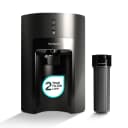
2. Native M2 Pro Water Purifier by Urban Company — Best Premium
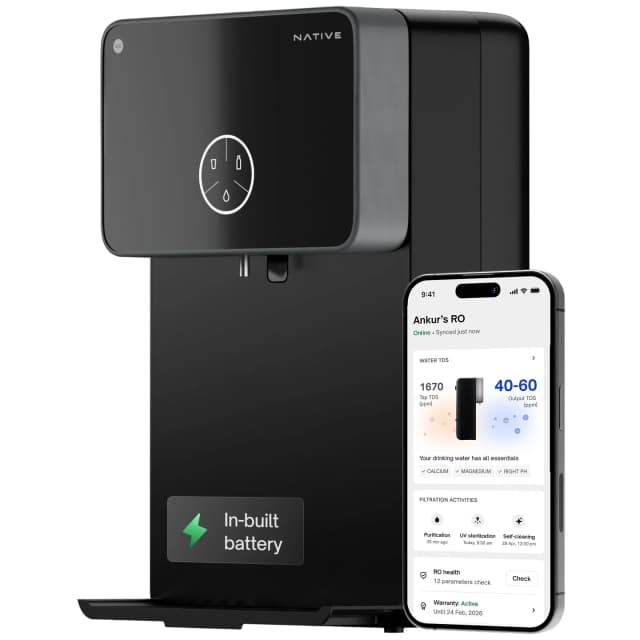
The Native M2 Pro is the most technologically ambitious purifier in this lineup — and arguably in the Indian market at its price point. Urban Company has built something that behaves less like a kitchen appliance and more like a connected health device. The trade-off: ₹19,499 and a 300 ppm input TDS ceiling that means it is best suited to municipal supply rather than high-TDS borewell zones.
The standout features are genuinely useful rather than gimmicky. The in-built battery backup lets you dispense stored water during power cuts — a real benefit in cities with unpredictable supply. The touch-screen display with preset dispensing modes (glass, bottle, free-flow) is more convenient than the standard tap-and-wait design of every other purifier here. The Urban Company app tracks input and output TDS in real time, monitors filter health across 12 parameters, and sends service alerts before problems develop rather than after your water starts tasting off.
The 10-stage purification adds genuine nutritional value: copper enrichment for digestion benefits, alkaline treatment, and remineralisation with calcium and magnesium. Critically, Native uses 100% RO processing — no MTDS blending or RO bypassing — then restores minerals through a dedicated stage, giving you safe water that is also nutritionally complete.
The 2-year unconditional warranty covering all filters, membranes, and electrical components is the leading coverage in the Indian RO market. No AMC calls, no surprise service charges for two full years. At year two, a single ₹5,000 renewal refreshes everything and extends cover for the next two years.
One limitation worth flagging clearly: the M2 Pro lists a maximum input TDS of 300 ppm. Buyers in hard-water or borewell-heavy areas should test their source water first — if you regularly exceed 300 ppm, the Native M1 below is the correct Native choice for your home.
Purification Technology
10-Stage RO + UV + Copper + Alkaline + Mineraliser
Storage Capacity
8 litres
Flow Rate
Touchscreen preset dispensing
TDS Reduction
Up to 300 ppm input
Annual Maintenance
None for 2 years (self-cleaning)
Warranty
2-year unconditional
Pros
- 2-year unconditional warranty — all filters, membranes, and electrical parts covered
- In-built battery backup for water dispensing during power cuts
- Real-time 12-parameter water health monitoring via Urban Company app
- Zero AMC or service calls for 2 years; ₹5,000 renewal renews everything
- Touch-screen with preset dispensing modes (glass, bottle, free-flow)
Cons
- Input TDS limited to 300 ppm — not suited for high-TDS borewell or hard-water areas
- Highest price in this lineup at ₹19,499
Our Verdict
The most feature-rich purifier in India — smart monitoring, touch dispensing, in-built battery backup, and a 2-year unconditional warranty covering all filters and electrical parts.
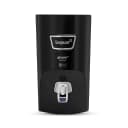
3. Aquaguard Delight Aquasaver Water Purifier — Best Overall
Aquaguard (Eureka Forbes) has been synonymous with water purification in India for over four decades, and the Delight Aquasaver is their current answer to two questions Indian households legitimately ask: how often do I have to change filters, and how much water am I wasting? On both counts, the answers are meaningfully better than most competition at this price.
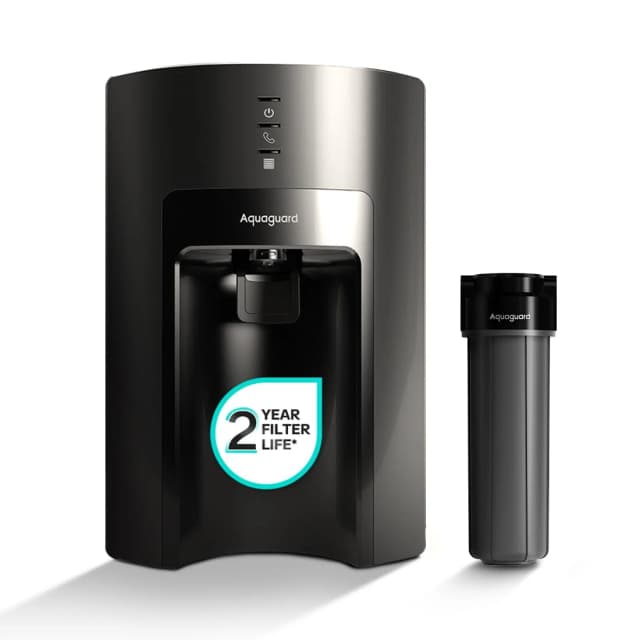
The NanoPore Long Life Filter technology (2-year rated life) removes a broader contamination profile than standard RO membranes: microplastics, pesticides, industrial waste (lead, mercury), bacteria, viruses, and cysts — contaminants increasingly present in Indian surface and groundwater as industrial activity expands. The 9-stage purification includes UV E-boiling (disinfection equivalent to 20+ minutes of boiling) and double Ultra Filtration passes for crystal-clear output regardless of seasonal turbidity spikes.
The Aquasaver Mineraliser Technology is the headline feature: 60% higher water recovery compared to older-generation RO systems. Standard RO purifiers waste 3–4 litres for every litre purified. The Aquasaver brings that ratio significantly closer, saving thousands of litres annually. For Indian households paying volumetric water bills — or living in cities where summer supply is genuinely restricted — this is a real-money saving over the device's life, not marketing copy.
The 2-in-1 Mineral Charge restores calcium and magnesium to the purified output. Storage at 6.2 litres is the smallest tank in this lineup, which may matter for larger families in peak-usage mornings. At ₹12,499 and backed by Eureka Forbes' four-decade legacy and nationwide service network, the Aquaguard Delight Aquasaver is the sensible choice for buyers who want established-brand confidence, long filter life, and water-saving technology together.
Purification Technology
9-Stage RO + UV + UF + Mineral Charge (NanoPore)
Storage Capacity
6.2 litres
Flow Rate
20 LPH
TDS Reduction
Up to 2000 ppm input
Annual Maintenance
2-year filter life (NanoPore)
Warranty
1 year
Pros
- 60% higher water recovery (Aquasaver technology) — significantly reduces daily wastage
- NanoPore Long Life Filter removes microplastics, pesticides, and industrial waste
- 2-year filter life with 2 free cleaning services included
- Backed by Eureka Forbes' four-decade legacy and nationwide service network
- 2-in-1 Mineral Charge restores calcium and magnesium to purified output
Cons
- Smallest tank in this lineup (6.2L vs 7–8L for other picks)
- 1-year warranty on repair visits (first year only per terms)
Our Verdict
India's No.1 purifier brand with 60% higher water recovery, 2-year NanoPore filter life, and 9-stage purification — the smart choice for water-conscious Indian households.
4. Native M1 Water Purifier by Urban Company — Most Versatile
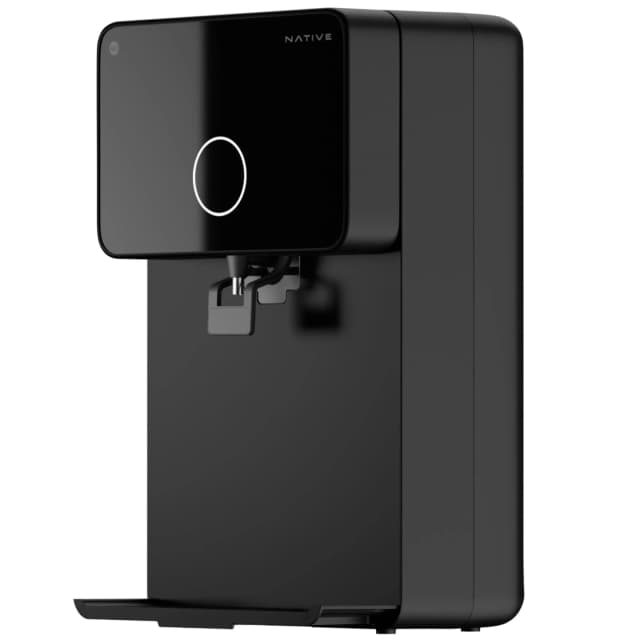
The Native M1 is the M2 Pro without the smart display, app connectivity, and battery backup — and the ₹3,500 price difference at ₹15,999 versus ₹19,499 is worth examining carefully. What you keep: the full 10-stage purification (RO+UV+Copper+Alkaline+Mineraliser), the 2-year unconditional warranty, zero-service filter life, and 100% RO processing with remineralisation. What you give up: real-time app monitoring, touch preset dispensing, and the ability to dispense during a power cut.
For most Indian households, that is a sensible trade. The core purification quality is identical to the M2 Pro. Input TDS is supported up to 2,000 ppm — borewell and hard-water compatible, unlike the M2 Pro's 300 ppm ceiling. If you are in a high-TDS area and want the Native experience (2-year maintenance-free ownership, copper enrichment, mineral-restored water), the M1 is the correct choice over the M2 Pro regardless of budget.
The core promise here is straightforward and well-delivered: pure water, zero maintenance hassle, and a transparent ₹5,000 renewal every two years covering all filters and warranty extension. Wall-mount installation suits kitchens where counter space is at a premium.
Purification Technology
10-Stage RO + UV + Copper + Alkaline + Mineraliser
Storage Capacity
8 litres
Flow Rate
20 LPH
TDS Reduction
Up to 2000 ppm input
Annual Maintenance
None for 2 years (self-cleaning)
Warranty
2-year unconditional
Pros
- 2-year unconditional warranty with zero maintenance calls or AMC
- Handles up to 2000 ppm TDS — borewell and hard-water compatible
- Copper enrichment and full mineral remineralisation (calcium, magnesium, alkaline)
- Same 10-stage purification as the M2 Pro at ₹3,500 less
- After 2 years: full filter refresh + warranty renewal for ₹5,000
Cons
- No smart app connectivity or real-time monitoring (unlike M2 Pro)
- No battery backup for power cuts; standard tap dispensing only
Our Verdict
Zero-maintenance for 2 years, copper-alkaline remineralisation, and 2000 ppm borewell compatibility — the Native M1 is the right call when you want premium purification without the smart-home premium.
5. Livpure GLO PRO++ Water Purifier — Best Budget
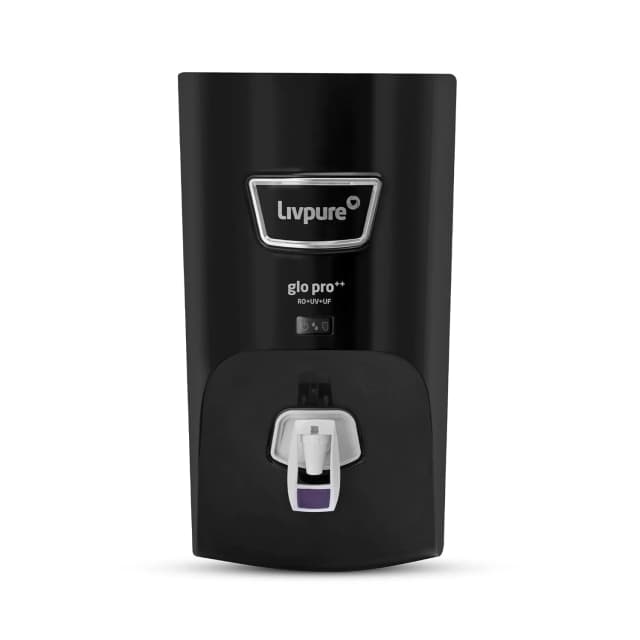
At ₹8,999, the Livpure GLO PRO++ costs roughly half of the mid-range options here, and it earns its place on this list by delivering clean, well-tasting water without cutting corners on fundamentals. It is the right recommendation for someone in a municipal-supply apartment who wants reliable purification, a nationally available service brand, and money left over.
The 7-stage purification (Sediment, Pre-activated Carbon, Anti-Scalant, RO Membrane, UV Disinfection, Ultra Filtration, Silver Post-Carbon) covers every waterborne threat likely in Indian municipal supply. The Anti-Scalant cartridge protects the RO membrane from hard-water scaling, extending membrane life in areas with moderate mineral load. The Silver-Impregnated Post-Carbon filter actively prevents bacteria regrowth inside the filter itself, keeping output safe even when water sits in the 7-litre tank overnight.
What you are not getting: long-life filters (standard 6–12 month replacement cycle), mineral retention, or smart monitoring. Filter costs add up — budget ₹3,000–5,000 per year for consumables. For buyers who simply want dependable RO+UV+UF purification without paying for features they won't use, the GLO PRO++ covers the essentials well and is backed by Livpure's pan-India service network.
Purification Technology
7-Stage RO + UV + UF + Silver Post-Carbon
Storage Capacity
7 litres
Flow Rate
12 LPH
TDS Reduction
Up to 2000 ppm input
Annual Maintenance
Annual (filter every 6–12 months)
Warranty
1 year
Pros
- Most affordable RO+UV+UF purifier in this lineup at ₹8,999
- Silver Post-Carbon filter actively prevents bacteria regrowth in stored water
- Anti-Scalant cartridge protects RO membrane in hard-water areas
- Backed by Livpure's pan-India service and support network
- Taste-enhancing Post-Carbon polishing removes odour from stored water
Cons
- Standard 6–12 month filter cycle; ₹3,000–5,000/year in consumables
- No mineral retention technology (TDS control or remineralisation)
- 7L tank (vs 8L in KENT and Native models)
Our Verdict
The clearest budget pick in the category — 7-stage RO+UV+UF purification with Silver Post-Carbon protection, verified by 14,798 buyer reviews at ₹8,999.
The Verdict
For most Indian households, the KENT Grand RO at ₹12,598 is our top recommendation — proven, widely serviced, and compatible with any water source up to 2,000 ppm. If smart monitoring, touch dispensing, and battery backup matter to you, the Native M2 Pro at ₹19,499 is the most feature-rich purifier in India at this price. The Native M1 at ₹15,999 gives you the same 2-year maintenance-free ownership and remineralisation without the smart layer — and handles borewell TDS up to 2,000 ppm, which the M2 Pro cannot. The Aquaguard Delight Aquasaver at ₹12,499 is the pick if water wastage or filter frequency concern you, and the Livpure GLO PRO++ at ₹8,999 delivers reliable RO+UV+UF purification for city apartments without overcomplicating the purchase.
Water Purifier Buying Guide for Indian Homes
Choosing a water purifier has more lasting consequences than most kitchen appliance decisions — it directly affects your family's health every day, and a poor match between purifier technology and your source water means either wasted money or inadequate protection. Here is what Indian buyers specifically need to know.
RO, UV, or UF — Which Purification Method Does Your Home Need?
The Indian market uses three core technologies, typically in combination.
RO (Reverse Osmosis) forces water through a semi-permeable membrane at pressure, physically removing dissolved salts, heavy metals, fluorides, nitrates, and chemical contaminants that UV and UF cannot touch. It is essential when source TDS exceeds 300 ppm — which includes most borewell water in India and municipal supplies in hard-water cities (Delhi, Bengaluru, Hyderabad, Chennai, across Rajasthan). The trade-off: RO removes beneficial minerals too, which is why the better systems add TDS control or a remineralisation stage to restore them. RO also wastes water — the Aquaguard Aquasaver's 60% recovery claim matters precisely because standard RO typically rejects 2–3 litres for every litre purified.
UV (Ultraviolet) disinfects by killing bacteria, viruses, and protozoa with radiation. It adds no chemicals, changes no taste, and works instantly. UV alone is sufficient for low-TDS municipal water with no heavy-metal contamination, but it leaves dissolved chemicals, fluorides, and metals untouched — which is why every purifier in this list pairs UV with RO for complete protection.
UF (Ultrafiltration) removes fine suspended particles, cysts, and some bacteria through hollow-fibre membranes. It is a polishing stage: effective against physical impurities but unable to remove dissolved chemical contaminants. Combined with RO and UV (as in the Aquaguard and KENT systems here), UF ensures crystal-clear output even when source water carries visible turbidity after heavy rain or pipe disturbance.
For Indian homes: if your source is borewell or hard municipal water, you need RO. If it is tested low-TDS municipal supply, UV+UF may technically suffice — but given how variable Indian supply quality is across seasons and years, an RO system is the safer long-term investment. If you are planning a complete kitchen upgrade, pairing a good water purifier with a capable mixer grinder covers the two kitchen appliances that see daily use in almost every Indian home.
TDS Levels and Water Source: How to Match the Purifier to Your City
TDS — Total Dissolved Solids — is the single most important number for purifier selection. The Bureau of Indian Standards recommends drinking water TDS below 500 ppm; water above 1,000 ppm tastes noticeably bitter or salty; above 2,000 ppm it poses long-term health risks.
Municipal supply in major metros typically runs 100–400 ppm. Reasonably clean chemically, but pipes add rust, chlorine, and occasional bacterial contamination. An RO+UV combination (any purifier in this list) is more than adequate.
Borewell water in South India and Rajasthan often measures 600–2,000 ppm, with fluoride and hardness as the primary concerns. Four purifiers here are rated to 2,000 ppm input — the KENT Grand, Aquaguard Delight, Native M1, and Livpure GLO PRO++. The Native M2 Pro (300 ppm maximum) does not qualify for these areas.
Tanker supply is variable and unpredictable. All five purifiers in this list explicitly support tanker water. The KENT Grand's tamper-proof fused RO membrane offers extra protection when supply-chain quality cannot be independently verified.
Post-monsoon municipal supply regularly sees spikes in turbidity, organic load, and bacterial contamination. The Aquaguard's Mega Sediment Filter and the KENT's multi-stage pre-filtration are specifically suited to this scenario.
A ₹200 TDS meter from Amazon gives you an accurate reading in seconds. Test your tap, your borewell if applicable, and your post-monsoon supply. Match that number against the supported TDS max spec — and if you are in a hard-water area, the Native M2 Pro drops off the shortlist despite its other advantages.
Frequently Asked Questions
Which is the best water purifier under ₹10,000 in India?
The Livpure GLO PRO++ at ₹8,999 is the strongest pick under ₹10,000. Its 7-stage RO+UV+UF purification covers all major waterborne threats typical of Indian municipal supply, and the Silver-Impregnated Post-Carbon filter actively prevents bacteria regrowth in the storage tank — a protection that most purifiers at this price skip. It is backed by Livpure's pan-India service network, so filter replacements and servicing are easy to arrange even outside major metros. The main ongoing cost to plan for is annual filter replacement, typically ₹3,000–5,000 per year. For a city apartment on municipal supply, the GLO PRO++ delivers reliable protection without over-engineering the purchase.
What is the difference between RO, UV, and UF purification?
RO (Reverse Osmosis) removes dissolved chemical contaminants — salts, heavy metals, fluoride, pesticides — using a semi-permeable membrane under pressure. It is essential when source TDS exceeds 300 ppm. UV (Ultraviolet) kills bacteria and viruses by irradiating them, leaving water chemistry unchanged with no chemicals added and no taste alteration. UF (Ultrafiltration) physically filters out suspended particles, cysts, and fine silt through hollow fibres. Quality Indian purifiers combine all three: RO handles the chemical load, UV disinfects, and UF polishes for clarity. Given that Indian water can simultaneously carry high TDS, bacterial contamination, and suspended turbidity — particularly in post-monsoon months — an RO+UV+UF system is the right baseline for most Indian homes, not an overspend.
How often should I service my water purifier?
For conventional RO purifiers (KENT Grand, Aquaguard Delight, Livpure GLO PRO++), the standard schedule is filter replacement every 6–12 months for sediment and pre-carbon filters, and every 12–24 months for the RO membrane itself. Most manufacturers include a free first-year service and offer AMC plans from year two. The Native M1 and M2 Pro break this pattern entirely: their long-life multi-micron filters and self-cleaning Smart Rinse technology require zero service calls for two full years. After that, one ₹5,000 renewal covers all filters, servicing, and warranty extension for the next two years. If you travel frequently, work long hours, or simply dislike coordinating technician visits, the Native models' zero-maintenance ownership is a real lifestyle benefit beyond the cost comparison.
Is RO water safe for daily drinking? Does it remove essential minerals?
RO water is safe — it is the standard used in bottled water production and hospital-grade purification worldwide. The concern about mineral removal is legitimate but addressable: standard RO does strip calcium and magnesium alongside contaminants. All five purifiers in this list address this through different approaches — KENT uses a TDS Control valve to blend some pre-RO water back in; the Aquaguard uses a 2-in-1 Mineral Charge stage; both Native models use dedicated copper-alkaline remineralisation. The practical result is output water tuned to a healthy 150–300 ppm range — below the WHO's 500 ppm ceiling and well above the flat, tasteless profile of near-zero TDS water. Your kitchen appliances process food; your purifier processes water — and just as a good air fryer preserves more nutrients than deep frying, a purifier with remineralisation produces healthier output than one without.
Which water purifier works best for borewell or hard water in India?
For borewell or high-TDS hard water — common in South India, Rajasthan, Gujarat, and expanding suburbs where municipal infrastructure has not kept pace with population growth — you need a purifier rated for input TDS up to 2,000 ppm with robust pre-filtration to handle suspended sediment. From this list, the KENT Grand RO, Aquaguard Delight Aquasaver, Native M1, and Livpure GLO PRO++ all qualify. The Native M2 Pro does not (300 ppm max input TDS). Between the four compatible options, KENT's 19,000+ pin code service network is the strongest differentiator for borewell users — where annual service access matters most. The Aquaguard's Aquasaver water-recovery technology is especially valuable in areas where groundwater is being drawn from a depleting source, making every litre recovered count.
Final Thoughts
At the end of the day, the right water purifier comes down to what your tap actually gives you and how much you value maintenance-free ownership. Check your source water TDS first — it narrows the list immediately. Then weigh whether you want the peace of mind of a proven brand like KENT or Aquaguard, the zero-maintenance 2-year cycle of a Native model, or simply the best RO purification your budget allows. Any pick on this list puts safe drinking water in your glass; what separates them is everything around that core promise.